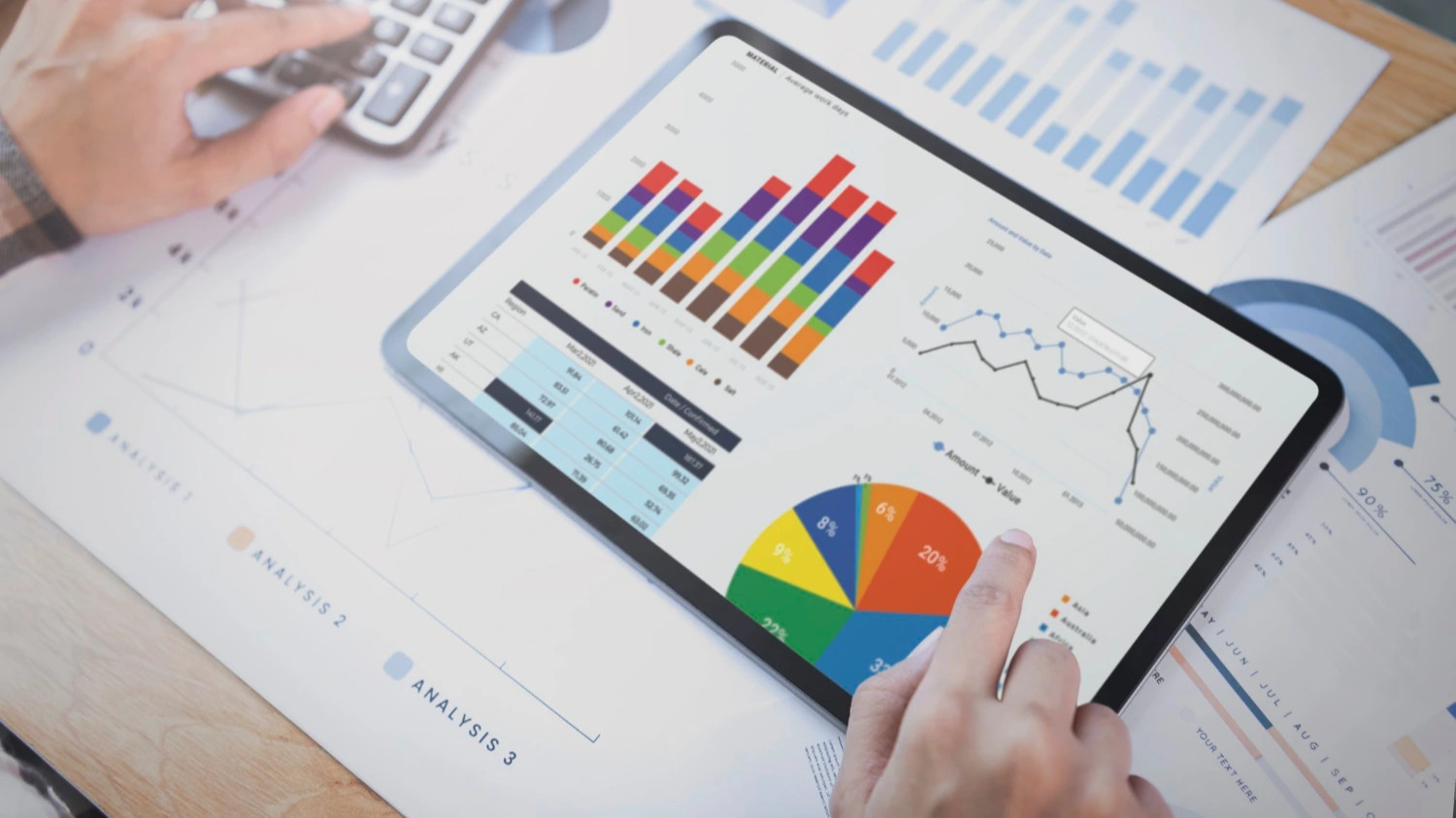
What is a metric? Discover its importance in business
Have you ever wondered what a metric is and why it's so important in the business world? If the answer is yes, you've come to the right place. In this article, we'll explore in detail what metrics are, their relevance in business management, and how to differentiate them from other concepts like indicators and KPIs. Get ready to delve into the fascinating world of measurement and data analysis in the business realm.
What is a metric and why is it important?
A metric is a measurement used to evaluate and quantify a specific aspect of a business's performance or results. Essentially, metrics provide us with quantitative data that helps us understand how our business is performing in different areas, from sales and marketing to operations and customer service.
Imagine you're piloting an airplane. Without measuring instruments like an altimeter, speedometer, and compass, it would be impossible to determine your altitude, speed, and direction. Similarly, in the business world, metrics act as navigation instruments that allow us to monitor our business performance and make informed decisions.
What is the importance of measuring what happens in your business?
To understand the importance of measuring what happens in your business, consider this simple scenario: how would you coordinate a social gathering without a calendar and a sense of time? It would be chaotic and unpredictable. Similarly, in the business world, metrics provide us with benchmarks to coordinate actions, set goals, and evaluate progress toward those goals.
Metrics also allow us to:
Coordinate actions within a complex system like a business.
Establish benchmarks to measure the impact of our actions.
Compare the current state to the desired state and take corrective action if necessary.
The difference between indicator, metric, and key performance indicator (KPI) in a business context
In the business world, terms like "indicator," "metric," and "KPI" are often used interchangeably, but what is the difference between them?
Indicator or Measure: An indicator is simply a number that defines a specific issue, but it lacks context. For example, my current weight is 84 kg. However, without context, we cannot determine whether that is a healthy weight or not.
Metric: A metric is the result of the relationship between two indicators. That is, a metric provides context by comparing two measurements. For example, return on investment (ROI) is a metric that results from dividing the profit earned from an investment by the cost of that investment.
KPI (Key Performance Indicator): KPIs are metrics that are especially relevant to business activity. These metrics help us evaluate our company's performance in specific areas and make strategic decisions accordingly.
In summary, metrics are fundamental tools in business management that allow us to measure, evaluate, and improve our business performance. By understanding the difference between indicators, metrics, and KPIs, we can use this information effectively to make informed decisions and achieve our business objectives.
Remember, in an increasingly competitive world, the ability to effectively measure and analyze data can make the difference between success and failure. So don't underestimate the power of metrics in your business!
Want to stay up-to-date on the latest news and trends in SEO and Artificial Intelligence? Follow our blog for regular updates and continue learning about Digital Marketing and Software Development.