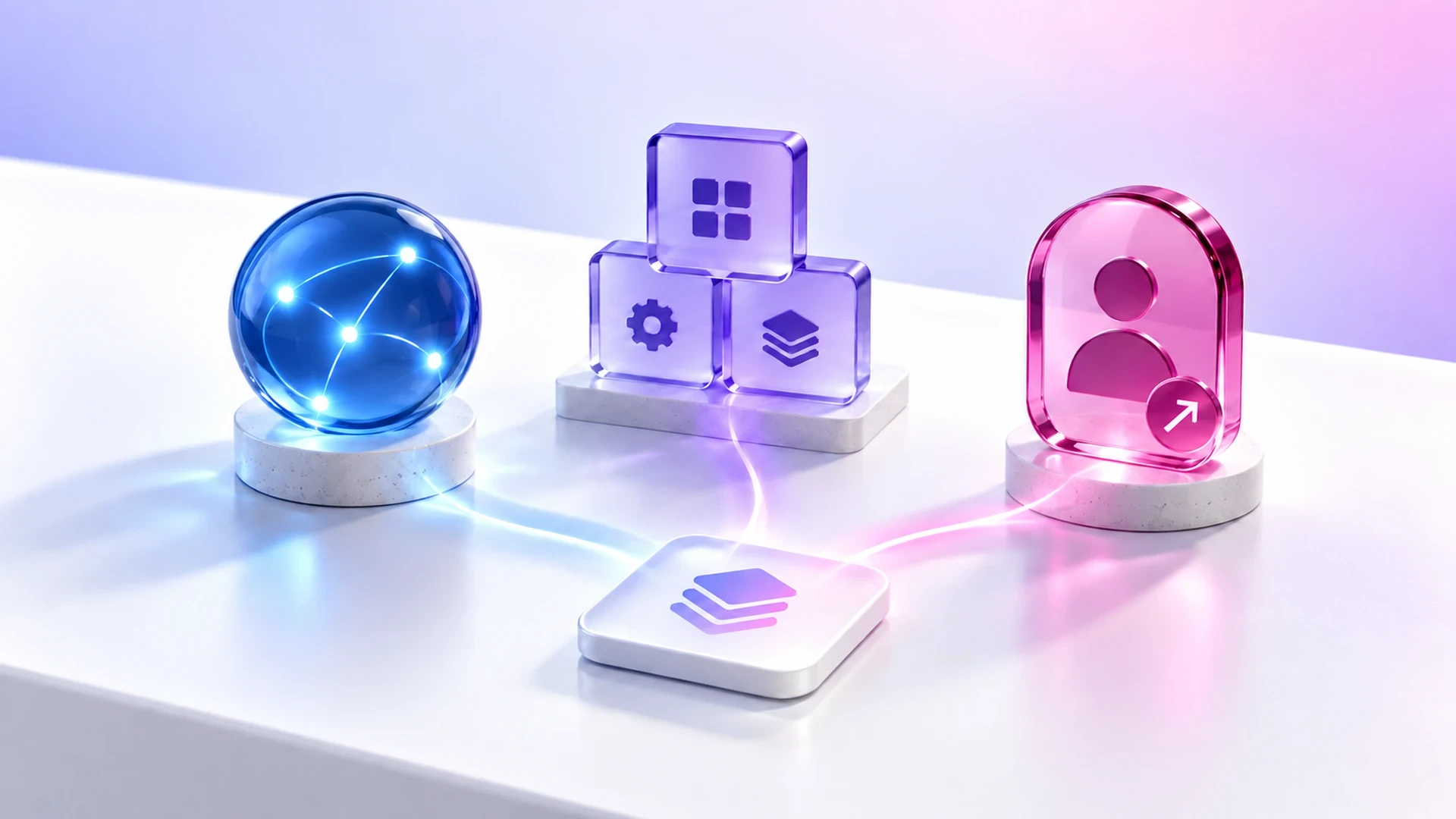
How Las Vegas businesses can turn digital ideas into scalable systems
Every growing business eventually reaches a point where the tools that helped it start are no longer enough.
A spreadsheet becomes too fragile. A website stops supporting the sales process. A manual workflow starts slowing down the team. A set of disconnected apps creates more work instead of less. At that stage, the question is no longer, "Do we need another tool?" The better question is, "What kind of digital system would actually fit the way this business works?"
For businesses in Las Vegas, that question matters. Local companies often operate in fast-moving environments where customer experience, internal speed, visibility, and reliability all affect growth. A digital idea can become a real advantage, but only if it is turned into a system that can scale, be measured, and improve over time.
What is a scalable digital system?
A scalable digital system is more than a website, app, dashboard, or automation. It is a connected set of digital tools built around a business goal.
That goal might be:
Reducing manual work.
Improving customer communication.
Capturing and qualifying leads.
Managing operations from one place.
Giving customers a better online experience.
Connecting marketing, sales, and internal workflows.
Supporting a product or service after launch.
A scalable system does not have to be complex at the beginning. In fact, the best first version is often focused and practical. What makes it scalable is that it can grow without forcing the business to start over every time a new need appears.
Why disconnected tools become a growth problem
Many businesses start with whatever tool solves the immediate issue. That is normal. A form builder handles inquiries. A spreadsheet tracks orders. A basic website explains the service. A social media page keeps the brand visible.
The problem appears when those tools stop working together.
Common signs include:
The same information has to be entered in multiple places.
Leads arrive, but no one can easily track their status.
Customers ask for updates the team cannot find quickly.
Reports take too long to prepare.
A website gets traffic, but does not support conversion.
Marketing content exists, but is not connected to a lead path.
The business depends on one person who "knows how everything works."
When this happens, the business does not simply need another app. It needs a better system.
Start with the business problem, not the technology
The first step is not choosing a platform or asking whether the business needs AI, a mobile app, a new website, or custom software.
The first step is defining the problem clearly.
Useful questions include:
What process is taking too much time?
Where are leads, customers, or tasks getting lost?
What information does the team need but cannot access easily?
What customer experience feels outdated or inconsistent?
What work is repeated often enough to consider automation?
What part of the business would improve if it were easier to measure?
Technology works best when it is shaped around a real operational or commercial need. Without that clarity, even an advanced tool can become another disconnected piece.
Where custom software fits
Custom software becomes valuable when the business has a process that generic tools cannot support well.
That might include:
A unique internal workflow.
A customer portal.
A booking, quoting, or request system.
A dashboard for operations.
A platform that connects multiple users or roles.
A tool that needs to integrate with existing systems.
The goal of custom software is not to build something complicated for its own sake. The goal is to create a system that reflects how the business actually works.
For a small or mid-sized business, custom software can start with one focused workflow, then expand as the business learns what it needs next.
Where AI automation fits
AI can be useful when it supports a specific task or workflow. It should not be added just because it sounds innovative.
Practical uses can include:
Helping organize or summarize information.
Supporting customer intake or internal triage.
Reducing repetitive administrative work.
Helping teams analyze patterns in operational data.
Supporting content workflows when paired with human review.
AI should make work clearer, faster, or easier to manage. It should not replace good process design, human judgment, or compliance review where those are needed.
Where web apps and mobile experiences fit
A web application can help when users need to log in, submit information, manage tasks, view data, or interact with a business in a structured way.
A mobile experience can help when customers, field teams, or operators need access on the go.
The decision should come from usage patterns:
Who will use the system?
Where will they use it?
What action do they need to complete?
How often will they use it?
What information do they need at that moment?
A strong digital system meets users where the work happens.
Where SEO and marketing fit
A digital system also needs visibility. If the business creates a website, article, landing page, or app experience, people still need a path to find it and take action.
SEO and marketing help connect the system to demand.
That can include:
Service pages that explain the offer clearly.
Blog content that answers real customer questions.
Social content that introduces the problem and solution.
Calls to action that guide visitors toward a conversation.
Measurement that shows which pages, topics, and channels are starting to work.
For Exeditec, this is where software and marketing should not be treated as separate efforts. A useful system should support operations and growth.
Why support matters after launch
Launching a digital system is not the finish line.
After launch, the business will learn:
Which features people actually use.
Which steps create confusion.
Which content brings traffic or leads.
Which workflows need improvement.
Which integrations or reports become more important.
Support and maintenance keep the system useful. They help protect continuity, address issues, update functionality, and make improvements as the business changes.
A system that cannot evolve can quickly become another bottleneck.
A practical first step
The best first step is usually a digital assessment.
That assessment should identify:
The business problem.
The users involved.
The current tools and gaps.
The workflow that needs improvement.
The first measurable outcome.
The simplest useful version of the system.
From there, the business can decide whether the next step is custom software, a web app, AI automation, SEO support, marketing content, maintenance, or a combination.
Build the system around the business
For Las Vegas businesses, scalable digital systems are not about chasing every new technology trend. They are about creating a better way to operate, communicate, sell, and grow.
The right system starts with a clear problem. Then it connects the tools, workflows, content, and support needed to solve it.
Exeditec helps businesses explore that path through software development, AI, mobile applications, SEO, marketing, and ongoing support.
If your business has a digital idea, a manual process, or a set of disconnected tools that no longer fit, the next step is to define the system that should exist around it.